Inquiry Post #1
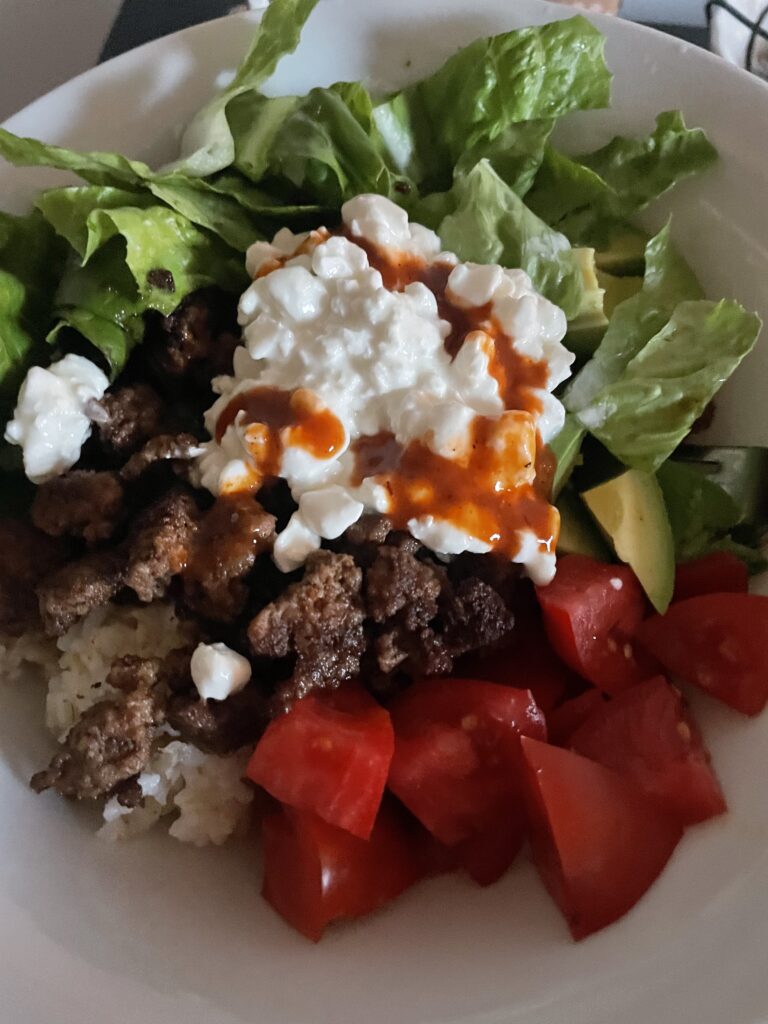
A bowl of beef, cottage cheese, tomatoes, avocados, lettuce, and hot sauce
Photo by Rachael Ho on iPhone, CC by 4.0 Rachael Ho
Beef Power Bowl
This first meal was quite easy to throw together! But it is packed with protein, with extra lean ground beef as the main protein source. Lean ground beef is a good source of protein and several essential nutrients, including B vitamins, iron, zinc, and selenium, but it also contains fat and calories, with lower fat content percentage. A supplementary protein source is cottage cheese, which also has healthy fats and calcium. I like the taste of it, and it adds that creamy-factor to the meal. Avocados also provided me with healthy fats, as well as fiber and key nutrients including potassium, folate, vitamin C, and vitamin E. Tomatoes and lettuce provide fiber and are healthy vegetables which allows for balance. The rice used was brown, which I used intentionally because it delivers more fiber, magnesium, potassium, iron, and certain B vitamins than white rice.
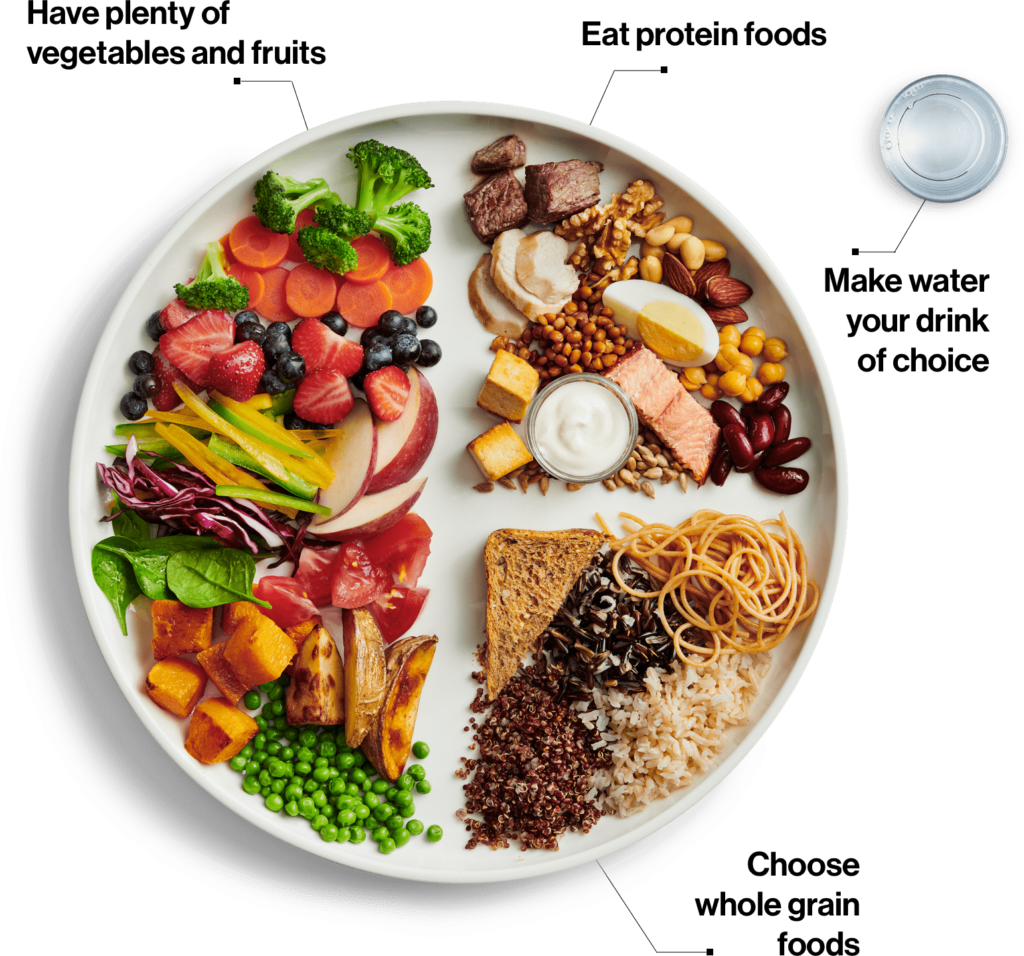
Portion sizes for an average meal
Photo by the Government of Canada
According to Canada’s Food Guide, half of your plate should be vegetables and Fruits, which makes up the majority of it. Emphasize a variety of colours and types, and choose more vegetables than fruits. A quarter of your plate should be Whole Grain Foods: Examples include whole grain bread, whole grain pasta, brown rice, quinoa, and oats. A quarter should be Protein Foods: Opt for a variety of protein sources, especially plant-based options more often. Examples include beans, lentils, nuts, seeds, tofu, eggs, lean meats, poultry, and fish. Although I agree with this recommendation, realistic meals for university students do not often appear on a balanced plate like this. I encourage people to eat as much whole foods as possible, but also to eat what makes you feel the best! I try to make do with the budget I have for groceries, and be smart about the amount I am spending in accordance to how many meals I can make out of the portion.